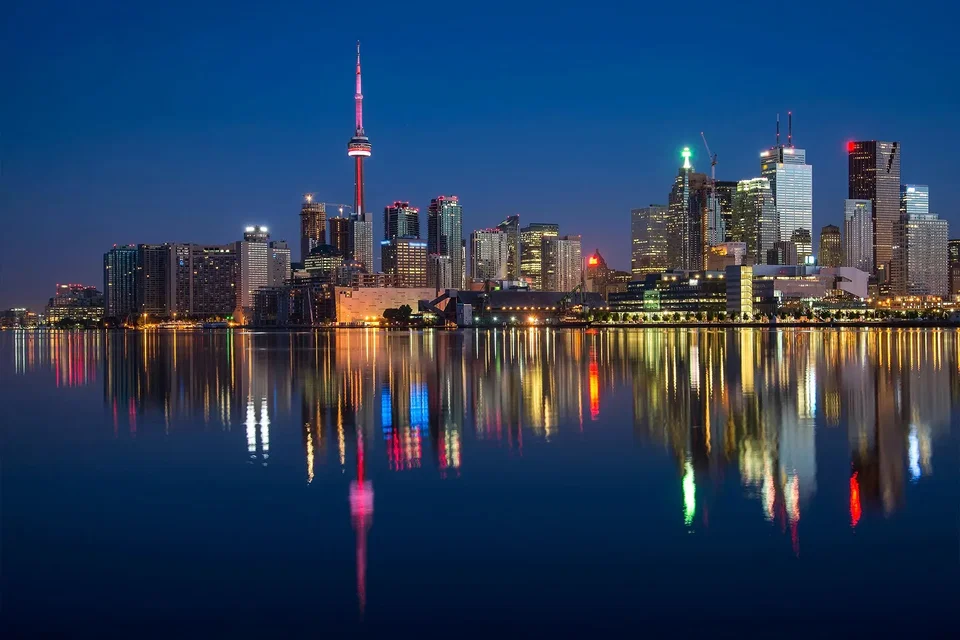
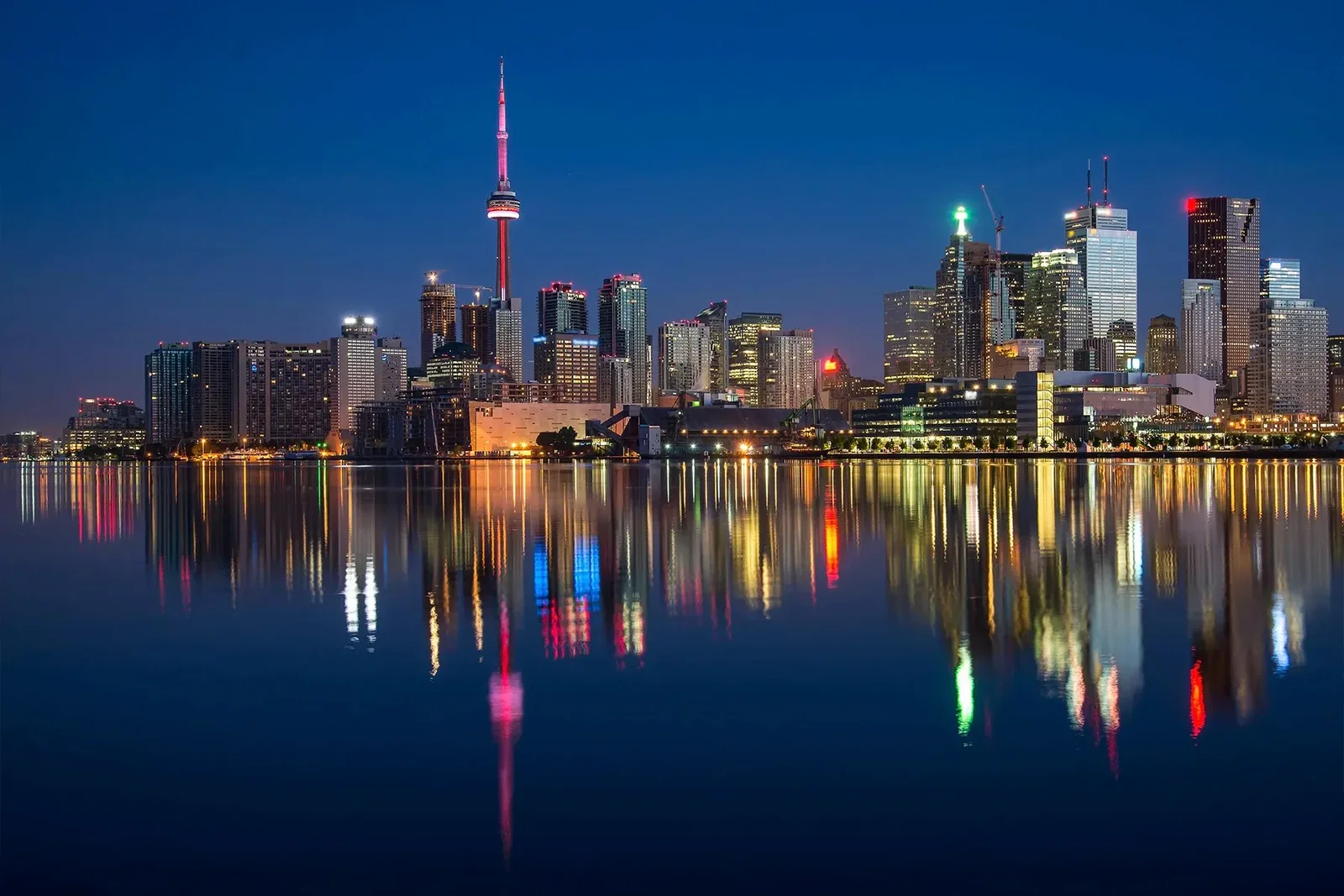
Toronto skyline at dusk with the CN Tower reflected in Lake Ontario

Destination guide

Toronto

North America · Canada

Canada's biggest city and diaspora gateway.

Best season

June to September for warm weather and outdoor festivals; late September to mid-October for fall foliage and smaller crowds

From Nairobi

Approximately 16–18 hrs from Nairobi (NBO) via Amsterdam, London, or Doha; no nonstop service currently

Why visit Toronto?

Toronto doesn't announce itself with a single showpiece — it layers you in. The food scene alone could justify a trip: Chinatown, Little Italy, Greektown, Little Portugal, and Koreatown sit within cycling distance of each other, each serving food that rivals the originating city. Add the AGO (Art Gallery of Ontario), the ROM (Royal Ontario Museum), and a theatre district that routinely premieres Broadway-bound shows, and the cultural diary fills quickly.

Outside the city core, the waterfront Trail stretches 56 km along Lake Ontario, the Toronto Islands offer a car-free afternoon escape just a 13-minute ferry ride away, and the Distillery District's Victorian industrial bones house galleries, craft breweries, and independent boutiques. For sports fans, Toronto is the only city outside the US with an NBA team (Raptors), an MLB team (Blue Jays), and an NHL team (Maple Leafs) — all playing within walking distance of each other downtown.

  • Ride the UP Express from the airport to downtown Union Station in exactly 25 minutes.
  • Eat your way through seven distinct ethnic neighbourhoods — all within a single city.
  • Take the 13-minute ferry to Toronto Islands for a car-free afternoon on the lake.
  • Day-trip to Niagara Falls in under 90 minutes by road or guided coach.
  • Catch a Raptors, Blue Jays, or Maple Leafs game — three major sports franchises, one walkable downtown.
  • Browse 5,000 years of world history at the Royal Ontario Museum, then lunch at nearby Yorkville.

Best for

Food explorers, arts and culture lovers, sports fans, families, first-time North America visitors

Trip style

City break, cultural immersion, culinary tour, winter city escape

Known for

CN Tower, multicultural food scene, Distillery District, Niagara Falls day trips, Toronto International Film Festival (TIFF)

Quick facts

Best time to visit

June to September for warm weather and outdoor festivals; late September to mid-October for fall foliage and smaller crowds

Currency

Canadian Dollar (CAD). 1 USD ≈ 1.36 CAD (check live rates before travel)

Languages

English (official); French recognised nationally. Mandarin, Cantonese, Punjabi, Tamil, Spanish widely spoken

Visa summary

Citizens of 50+ countries (UK, EU, Australia, Japan) need an Electronic Travel Authorization (eTA, CAD 7) instead of a visa. US citizens need a valid passport. Always verify current requirements at canada.ca/eta

Flight time from Nairobi

Approximately 16–18 hrs from Nairobi (NBO) via Amsterdam, London, or Doha; no nonstop service currently

Airport / arrival

Toronto Pearson International Airport (YYZ) is the main gateway, 27 km northwest of downtown. The Union Pearson Express train reaches Union Station in 25 minutes (CAD 12.35). Billy Bishop Airport (YTZ) on the Toronto Islands serves short-haul routes.

Safety note

Toronto is generally very safe. Exercise standard urban awareness in the Entertainment District late at night and around some stretches of Yonge St. Emergency: 911

Visa and entry

Look up entry rules by passport for travel to Canada on the Tsavaro visa checker.

Check visa requirements for Canada

Things to do

Ascend the CN Tower

1.5–2 hours

At 553 m, the CN Tower was the world's tallest free-standing structure for over 30 years. Take the glass-floor elevator to the LookOut Level or brave the EdgeWalk, the world's highest hands-free external walk on a curved building ledge, 356 m above the ground.

Explore the Distillery District

2–3 hours

North America's best-preserved collection of Victorian industrial architecture now houses galleries, artisan studios, indie boutiques, chocolatiers, and some of Toronto's most atmospheric restaurants and craft breweries. Free to enter; lively year-round, magical during the Christmas Market.

Visit the Royal Ontario Museum (ROM)

3–4 hours

Canada's largest museum spans natural history, world cultures, and art across six floors. Highlights include the Dinosaur Gallery, the Egyptian mummies, and the dramatic Michael Lee-Chin Crystal addition that juts from the Victorian facade like a geological eruption.

Walk the Toronto Waterfront Trail

Half day (full circuit by bike) or 1–2 hours on foot

The 56 km Waterfront Trail traces the full Lake Ontario shoreline through Harbourfront Centre, Sugar Beach, Corktown Common, and Humber Bay. Rent a bike at Harbourfront and ride as far east as the Beach neighbourhood for brunch.

Ferry to the Toronto Islands

Half day

A 13-minute ferry from the foot of Bay Street delivers you to a car-free archipelago of beaches, picnic lawns, a small amusement park (Centreville), and the best skyline view in the city. Ward's Island is the quietest; Centre Island suits families.

Graze through Kensington Market and Chinatown

2–3 hours

Two of Toronto's most characterful neighbourhoods share a border. Kensington is a bohemian maze of vintage shops, multicultural street food, and independent coffee roasters. Chinatown's Spadina Avenue is lined with roast-duck windows, dim-sum halls, and herbal apothecaries.

See a show in the Entertainment District

Evening

King Street West anchors a theatre corridor that regularly hosts world premieres. The Princess of Wales, Royal Alexandra, and CAA theatres all sit within four blocks. Check Mirvish Productions for current programming before you arrive.

Day trip to Niagara Falls

Full day

Niagara Falls is 130 km south of Toronto — under 90 minutes by car or two hours by GO Bus / guided coach. Ride the Hornblower (Niagara City Cruises) boat into the mist, walk the Journey Behind the Falls tunnels, and time your return for sunset over the Horseshoe Falls.

Art Gallery of Ontario (AGO)

2–3 hours

The AGO holds over 100,000 works spanning the Group of Seven's iconic Canadian landscapes, European masters, and contemporary global art. Frank Gehry redesigned the Walker Court facade in 2008 — the building itself is part of the experience.

Catch a live sports event

3–4 hours

Toronto is one of the world's rare cities with NBA, NHL, MLB, and MLS franchises all playing within walking distance of downtown. The Raptors and Maple Leafs share Scotiabank Arena on Bay Street; the Blue Jays play at Rogers Centre beside the CN Tower.

Best time to visit Toronto

The best time to visit Toronto is June through September, when temperatures are warm (average highs 22–28°C), patios are packed, and the city's outdoor festivals run back-to-back.

Summer (June–August) is the peak season. Expect the Toronto Jazz Festival (June), Caribbean Carnival (August — one of North America's largest street festivals), and TIFF (Toronto International Film Festival, September). Book accommodation well ahead; prices peak in July–August and again during TIFF.

Late September to mid-October is arguably the sweet spot: the summer crowds thin, fall foliage colours the Don Valley and High Park (peak colour usually mid-October), temperatures remain pleasant (10–18°C days), and hotel rates dip.

Winter (November–March) is cold — average January highs hover around -1°C, with wind chill making it feel colder. Snow is common but the city handles it well. The upside: hotel rates fall significantly, the Distillery District Christmas Market (late November to December) is a highlight, and indoor attractions like the ROM, AGO, and the PATH — the world's largest underground shopping network — come into their own. Ice skating at Nathan Phillips Square (outside City Hall) is free.

Spring (April–May) is unpredictable — warm spells alternate with cold snaps — but cherry blossoms in High Park (usually late April) draw large crowds and are well worth planning around.

Is Toronto safe to visit?

Yes — Toronto is one of the safest large cities in North America and consistently ranks among the world's most liveable cities. Violent crime rates are low by international standards, and the vast majority of visitors experience no safety issues whatsoever.

Practical tips to keep your trip smooth:

Use the TTC subway and streetcars confidently at all hours; they are well-lit, staffed, and generally reliable. The night bus network covers downtown after subway hours.

Stay aware on the Entertainment District strip (King/Adelaide/Richmond) and some stretches of Yonge Street late on Friday and Saturday nights — not dangerous, but crowded and occasionally rowdy.

Pickpocketing is not a significant concern but use standard precautions in busy markets (Kensington, St Lawrence) and on the subway at rush hour.

The PATH underground network and Union Station are very safe. If you're staying near Dundas Square, the area is busy 24/7 and well policed.

Emergency services are excellent — dial 911 for police, fire, or ambulance. The Toronto Police non-emergency line is 416-808-2222.

Toronto's communities are welcoming and inclusive; the city is widely regarded as one of the most LGBTQ+-friendly destinations in the world, anchored by the Church-Wellesley Village (the 'Gay Village').
Suggested itinerary

Toronto in 5 Days: Neighbourhoods, Lakefront & Niagara

A moderate-pace itinerary based in downtown Toronto (King West or Yorkville recommended). Uses public transit and walking for city days; rents a car or joins a guided coach for the Niagara day trip. Budget: mid-range (CAD 200–350/day including accommodation, meals, and activities).

Day 1

Arrive & Get Your Bearings Downtown

Take the UP Express from Pearson to Union Station (25 min). Check in, then walk north to St Lawrence Market — one of the world's great food markets, open Tuesday to Saturday. Pick up lunch from the lower-hall vendors (the peameal bacon sandwich from Carousel Bakery is non-negotiable). Spend the afternoon at the Distillery District — no entrance fee, easy to walk. End the evening with dinner on King Street West; Canoe or Alo if you're celebrating, Bar Raval for a casual pintxos warm-up.

Toronto — Arrive & Get Your Bearings Downtown

Travel essentials

Getting around

The TTC (Toronto Transit Commission) covers the city with four subway lines, surface streetcars, and buses. A single fare (Presto card) costs CAD 3.30; a day pass is CAD 13.50. The Union Pearson Express connects the airport to downtown in 25 min (CAD 12.35 one way). Biking is excellent along the waterfront — Bike Share Toronto docks are everywhere. Ubers and taxis are plentiful. Driving downtown is not recommended; parking is expensive and traffic congestion is significant.

Typical costs

Budget traveller: CAD 100–140/day (hostel, street food, free attractions). Mid-range: CAD 200–300/day (3-star hotel, restaurant meals, 1–2 paid attractions). Comfort: CAD 400+/day (boutique or 4-star hotel, fine dining). A restaurant main course: CAD 18–35. Beer at a bar: CAD 8–10. Presto card transit fare: CAD 3.30. CN Tower adult ticket: CAD 43. ROM adult: CAD 26.

Culture and etiquette

Toronto is an extremely multicultural and generally informal city. Tipping is customary and expected: 15–20% at restaurants, CAD 2–5 for taxi rides, CAD 2/bag for hotel porters. Smoking is prohibited in all indoor public spaces and within 9 m of entrances. Jaywalking is technically illegal but widely practised. Queuing is observed and expected — cutting in line is frowned upon strongly.

Safety and planning

Travel insurance covering medical is strongly advised; Canadian healthcare is not free for visitors and hospital bills can be significant. Keep a photocopy of your passport separate from the original. The Canadian government's Smart Traveller Enrollment Program (STEP) equivalent is the Registration of Canadians Abroad — non-Canadians should register with their own embassy on arrival for long stays.

Connectivity

Toronto has excellent 5G/LTE coverage throughout the city and suburbs. Free public Wi-Fi is available on the TTC subway (underground portions), in most cafes, the PATH network, Pearson Airport, and many public parks. Prepaid SIM cards from Rogers, Bell, and Telus are available at Pearson arrivals and at convenience stores city-wide. Expect to pay CAD 40–55 for a 30-day tourist SIM with generous data.

Payments

Canada is highly cashless — credit cards (Visa, Mastercard, Amex) are accepted almost universally, including on the TTC with contactless. Many smaller Kensington Market and Chinatown vendors prefer cash; carry CAD 50–80 in small bills. ATMs (ABMs locally) are plentiful; use bank-branded machines to avoid surcharge fees. Dynamic Currency Conversion is common — always choose to pay in CAD.

Toronto travel FAQs

More destinations to explore