Explore Rhodes Old Town on foot
Half day to full day
Wander 4 km of intact medieval walls, the Street of the Knights, the Palace of the Grand Master, and the Turkish Quarter (Socrates Street). Best done early morning before crowds arrive.
Destination guide
Dodecanese, South Aegean · Greece
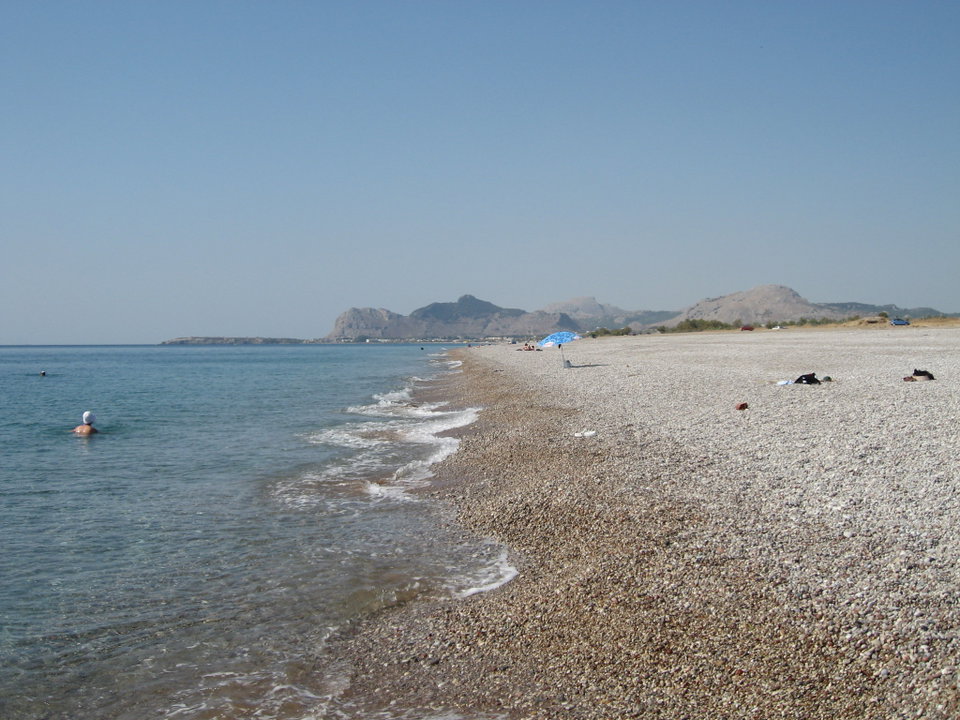
Medieval grandeur, 300 days of sunshine, and beaches for every mood — all on one Greek island.
Best season
May–June and September–October for warm weather without peak-season crowds; July–August hottest and busiest.
From Nairobi
Approx. 7–9 hrs (typically via Athens, Istanbul, or Dubai — no direct service).
Rhodes delivers a rare combination: a living medieval city that you sleep inside, not just visit on a day trip. The Knights of St John fortified this island for two centuries, and their legacy — the Palace of the Grand Master, the Street of the Knights, the great sea walls — survives in remarkable condition. Step outside those walls and you have an island of real variety: the Art Deco architecture of the New Town, the cosmopolitan buzz of Mandraki Harbour, windswept Cape Prasonisi where two seas meet, the hillside village of Lindos with its Acropolis overlooking a perfect horseshoe bay, and dozens of quieter beaches along the west and east coasts.
The island's 300+ annual sunshine days make it one of the sunniest places in Europe, yet it never loses a sense of authentic Greek life — especially inland, where villages like Emponas produce some of the Aegean's best wines, and the valley of Petaloudes fills every summer with jersey moths. Rhodes is large enough that you can spend a week and still feel you haven't exhausted it.
Best for
History, beach holidays, family travel, couples, solo explorers
Trip style
Cultural city break, island beach holiday, road trip
Known for
UNESCO Old Town, Street of the Knights, Lindos Acropolis, long sunshine season, Ancient Colossus of Rhodes
Best time to visit
May–June and September–October for warm weather without peak-season crowds; July–August hottest and busiest.
Currency
Euro (€)
Languages
Greek; English widely spoken in tourist areas.
Visa summary
No visa required for EU/EEA, UK, and US citizens for stays up to 90 days. Schengen rules apply.
Flight time from Nairobi
Approx. 7–9 hrs (typically via Athens, Istanbul, or Dubai — no direct service).
Airport / arrival
Rhodes International Airport Diagoras (RHO) is 14 km south-west of Rhodes Town; taxis take ~20 min, buses run regularly.
Safety note
Very safe for tourists. Standard precautions around pickpocketing in crowded Old Town areas are sufficient.
Visa and entry
Look up entry rules by passport for travel to Greece on the Tsavaro visa checker.
Check visa requirements for GreeceHalf day to full day
Wander 4 km of intact medieval walls, the Street of the Knights, the Palace of the Grand Master, and the Turkish Quarter (Socrates Street). Best done early morning before crowds arrive.
3–4 hours including village
A 4th-century BC Doric temple perched 116 m above the sea, accessed by a donkey path or a steep walk through Lindos village. The view over St Paul's Bay is worth every step.
2–4 hours
A sheltered cove of crystal-clear turquoise water on the east coast, named after the actor who once owned the land. Great snorkelling off the rocks.
Half day or full day
The southern tip of Rhodes where the Aegean meets the Mediterranean creates consistent, channelled winds. Several schools hire gear and offer lessons for all levels.
Half day
Rhodes has its own wine appellation (OPAP). The mountain village of Emponas is home to the Cair and Emery wineries — taste Athiri whites and Mandilaria reds with a meze spread.
1–2 hours
A shaded gorge where thousands of Callimorpha quadripunctaria moths (locally called butterflies) gather June–September, drawn by the scent of storax trees. A magical, silent walk.
Full day
Day-trip ferries from Mandraki Harbour reach the neoclassical pastel harbour of Symi in about 90 minutes. Swim in Nos Bay, eat fresh fish, and catch the last boat back.
2–3 hours
Rhodes New Town has fine Art Deco buildings from the Italian occupation period (1912–1943). The harbour entrance, traditionally guarded by bronze deer statues, was the legendary site of the Colossus.
The best time to visit Rhodes is May to June or September to October, when daytime temperatures sit between 22°C and 28°C, the sea is warm enough for swimming, and the island hasn't yet hit peak-season crowds or prices.
Spring (April–May): Wildflowers carpet the hillsides and the Palace of the Grand Master is largely tourist-free. The sea reaches about 19–21°C by late May — chilly for some but fine for a dip. Ideal for walkers and history lovers.
Early summer (June): The sweet spot. Reliably hot (25–30°C), sea at 23°C, long evenings, and restaurants and boat trips all fully open. Crowds are building but not oppressive.
High summer (July–August): Peak heat (35°C+ is common), peak prices, and peak crowds — the Old Town can feel uncomfortably busy by 11:00. Still a great beach holiday if you book accommodation well in advance and plan sightseeing for early morning. West-coast beaches get afternoon winds, which is a plus for kite-surfers.
Early autumn (September–October): Arguably the best overall window. The sea peaks at 26°C in September — warmest of the year. Crowds thin after the first week of September, prices drop, and the light turns golden. October remains warm (22–25°C) but some smaller restaurants begin closing mid-month.
Winter (November–March): Rhodes is quiet and sometimes wet, but mild by northern European standards (12–16°C). The Old Town is atmospheric with almost no other tourists, and several hotels stay open at very low rates. Not a beach trip, but a rewarding cultural one.
Yes — Rhodes is very safe for tourists and consistently ranks among the safest destinations in the Mediterranean. Violent crime affecting visitors is extremely rare, and the island has a well-established tourist infrastructure with reliable emergency services.
Pickpocketing and bag-snatching can occur in crowded parts of the Old Town bazaar and at busy beach car parks — use a money belt or a secure bag in these areas and don't leave valuables visible in a hire car.
The Old Town's uneven cobblestones are a genuine hazard after dark or in wet weather — wear proper footwear, not flip-flops, for evening walks inside the walls.
Rhodes can experience wildfires in July and August during prolonged heatwaves, as with much of Greece. Monitor local news alerts and follow any evacuation instructions from authorities immediately.
The sea is generally calm on the east coast; the west coast can have strong afternoon winds and undertow at some beaches — look for red flags and lifeguard signs.
Emergency contacts: Police 100, Ambulance 166, Fire 199, European emergency 112. Rhodes General Hospital is located in Rhodes Town.
Suggested itinerary
This itinerary uses Rhodes Town as the base for the first half and Lindos for the second, with a hire car from day 3. It suits a mid-range budget, mixes culture and beach time, and is designed for a couple or small group comfortable with some walking.
Day 1
Check in to a hotel inside or just outside the Old Town walls. Spend the afternoon wandering without a map — get lost in the medieval lanes, find the Street of the Knights, and climb a section of the walls before sunset. Dinner at a taverna on Socrates Street or in the quieter Agios Fanourios quarter.
A hire car (from around €25–40/day in shoulder season) is the most flexible option and essential for exploring the south and inland villages. The KTEL bus network connects Rhodes Town with Lindos (east coast) and Faliraki regularly, and with the west coast less frequently. Taxis are metered and reliable from Rhodes Town. Scooters and ATVs are widely available but use caution on mountain roads.
Budget: €60–90/day (hostel or simple room, self-catering, local buses). Mid-range: €120–200/day per couple (3-star hotel, taverna meals, hire car shared). Upmarket: €300–600+/day (boutique Old Town hotel, fine dining, private transfers). A taverna main course averages €12–18; a frappe coffee about €2.50.
Dress modestly when entering churches or monasteries — shoulders and knees covered (scarves often provided at sites). Tipping is appreciated but not obligatory; rounding up the bill or leaving 10% is the norm. Greeks eat late — dinner rarely before 21:00. Learning a few words (efharisto = thank you, parakalo = please/you're welcome) is warmly received.
Book accommodation well ahead for July–August. Travel insurance with medical cover is strongly recommended — the EHIC/GHIC card covers EU/UK citizens for state healthcare but not repatriation. Keep photocopies of your passport. EU roaming charges don't apply for most European visitors; check your plan.
4G/LTE coverage is excellent across Rhodes Town, Lindos, and main tourist areas; patchy in the deep south and mountain villages. Free Wi-Fi is standard in virtually all hotels, cafes, and many tavernas. A Greek SIM (Cosmote, Vodafone GR, or Wind) costs about €10–15 for a data-only prepaid starter pack.
Card payments (Visa/Mastercard) are widely accepted in hotels, restaurants, and larger shops. Smaller village tavernas and market stalls often prefer cash. ATMs are plentiful in Rhodes Town and Lindos; scarce in the deep south — withdraw before heading out. Dynamic Currency Conversion at ATMs should be declined; always choose to pay in euros.
Rhodes, Greece