Sunset over Lake Victoria from Mwanza, with fishing boats silhouetted against an orange sky and Bismarck Rock in the distance

Destination guide

Mwanza

Lake Victoria, Northwest Tanzania · Tanzania

Tanzania's lakeside city — gateway to Lake Victoria, rock formations, and island escapes

Best season

June to October (dry season); also January–February for a shorter dry window

From Nairobi

Approx. 1 hour 20 minutes direct

Why visit Mwanza?

Most Tanzania itineraries run east to west — Kilimanjaro, Zanzibar, Serengeti — and skip Mwanza entirely. That's your advantage. The city offers an authentic slice of lakeside Tanzanian life: busy fish markets, colourful ferry quays, and rocky outcrops that glow amber at golden hour.

Mwanza is also the practical launch point for the western Serengeti (Ndabaka and Kirawira gates are under three hours away), for Rubondo Island National Park — a forested chimp and elephant sanctuary in the lake itself — and for Ukerewe Island, the largest inland island in Africa. The lake is genuinely enormous here; sitting on a hotel terrace at dusk, you could be forgiven for thinking you're on a sea coast.

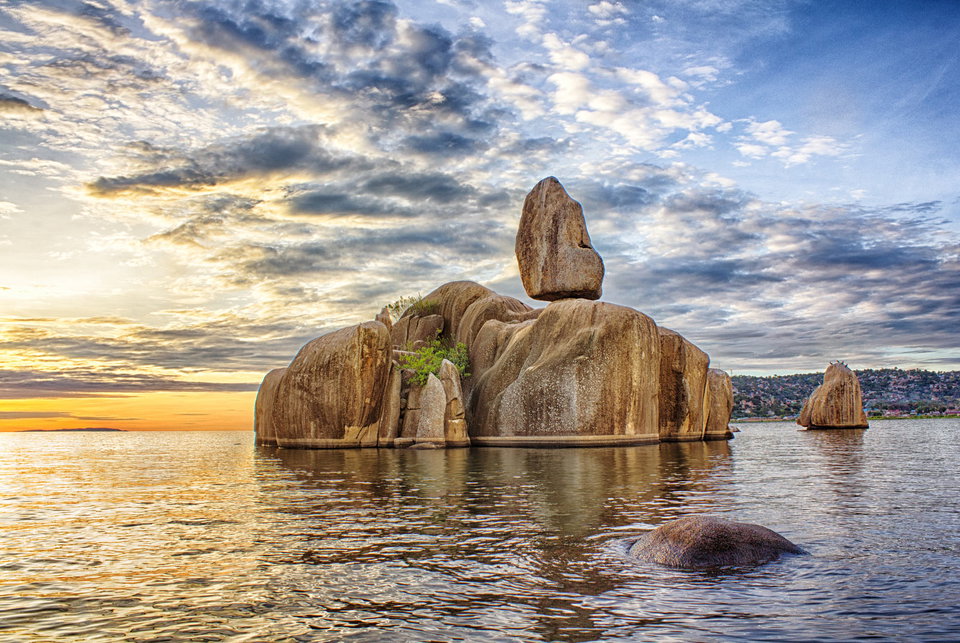
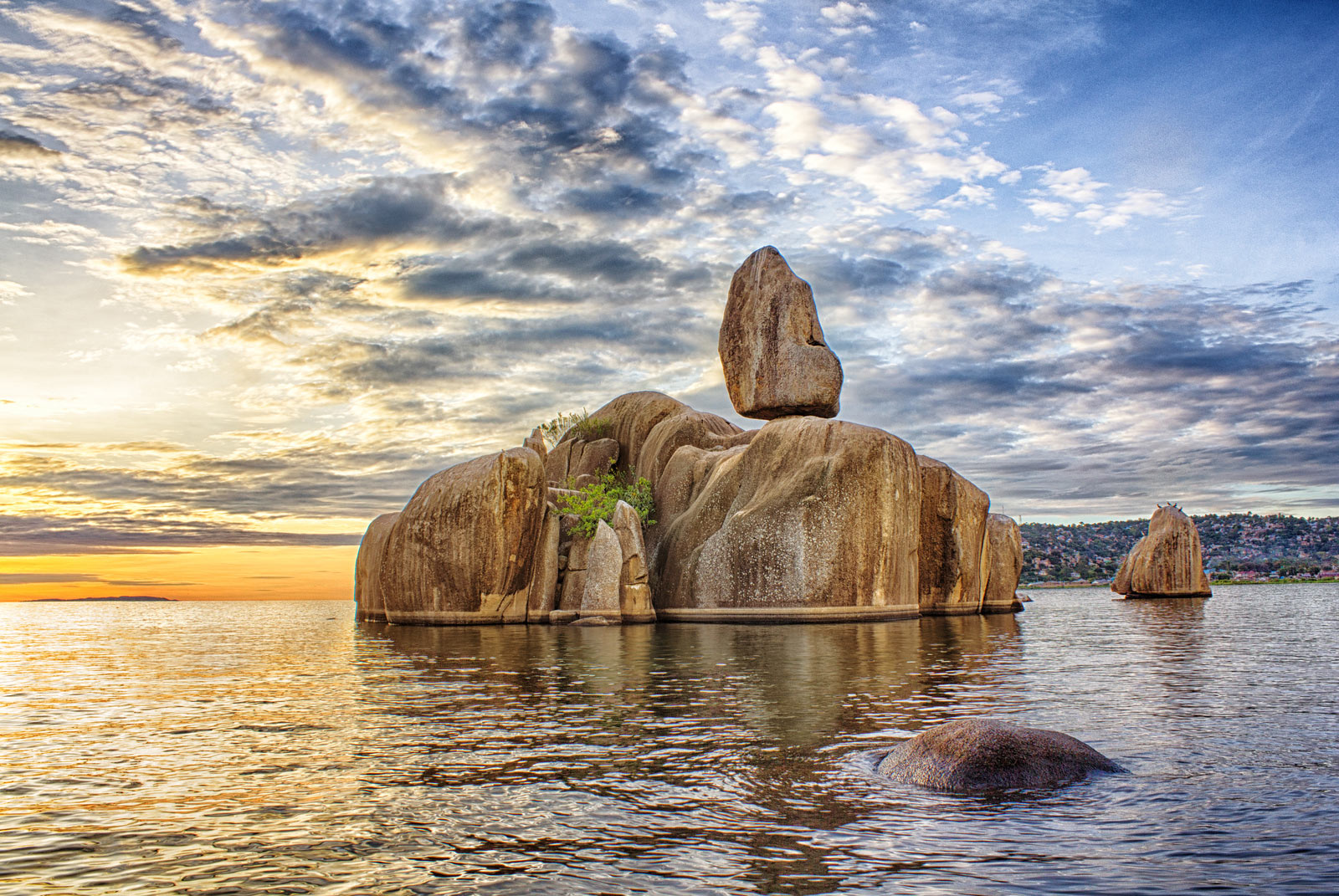
The city's geology is its most striking feature: enormous rounded granite kopjes (the same formations that define the Serengeti plains) erupt from the urban fabric, with residential streets weaving between boulders the size of houses. Bismarck Rock, balanced impossibly at the harbour entrance, has become the city's unofficial emblem.

  • Stand at Bismarck Rock as the sun drops over Lake Victoria — one of Tanzania's great free spectacles
  • Board a morning ferry to Ukerewe, Africa's largest inland island, just two hours from the city quay
  • Fly or drive to Rubondo Island National Park for chimps, elephants, and near-empty forest trails
  • Enter the western Serengeti via Ndabaka Gate — far fewer vehicles than the northern corridor
  • Watch the day's Nile perch catch land at Kirumba fish market at dawn, one of East Africa's most atmospheric scenes
  • Explore the Sukuma Museum at Bujora — the finest collection of Sukuma cultural heritage in the world

Best for

Adventurous travellers, western Serengeti extensions, lakeside culture, birding, off-the-beaten-path city breaks

Trip style

Cultural, Adventure, Wildlife, Stopover

Known for

Lake Victoria, Bismarck Rock, Sukuma culture, Rubondo Island, Nile perch fish markets

Quick facts

Best time to visit

June to October (dry season); also January–February for a shorter dry window

Currency

Tanzanian Shilling (TZS); USD widely accepted at hotels

Languages

Swahili (official); English spoken in hotels and business districts

Visa summary

Most nationalities require a Tanzania e-Visa, obtainable online before travel at evisa.immigration.go.tz

Flight time from Nairobi

Approx. 1 hour 20 minutes direct

Airport / arrival

Mwanza Airport (MWZ) is 10 km north of the city centre; taxis and boda-bodas available at the gate

Safety note

Generally safe; standard city precautions apply — avoid walking alone after dark and keep valuables out of sight near the ferry terminals

Visa and entry

Look up entry rules by passport for travel to Tanzania on the Tsavaro visa checker.

Check visa requirements for Tanzania

Things to do

Bismarck Rock at Sunset

1 hour

Mwanza's signature landmark is a precariously balanced granite boulder rising from the harbour waters. It's free to view from the lakefront promenade and best photographed at sunset when the rock glows orange. The colonial-era name reflects German East Africa's legacy in the region.

Kirumba Fish Market

1–2 hours

Arrive before 7 am to witness one of East Africa's busiest freshwater fish markets in full swing. Hundreds of fishermen unload Nile perch, tilapia, and dagaa (silver sardines) as buyers, trucks, and processing workers crowd the dockside. Raw, real, and completely compelling.

Rubondo Island National Park

2–4 days

A hidden gem in the southwest corner of Lake Victoria, Rubondo is accessible by charter flight (30 min) or boat from Muganza. The forested island shelters habituated chimpanzees, forest elephants, sitatunga antelope, and over 300 bird species. Walking safaris and fishing are the main activities — motor vehicles are virtually absent.

Ukerewe Island Day Trip or Overnight

1–2 days

Hop a public ferry from Mwanza's Bugarika Port to Ukerewe, the largest inland island in Africa. The two-hour crossing is an experience in itself: deck passengers, live chickens, and lake breezes. On the island, bicycle the quiet roads through fishing villages and mango groves, and visit the natural hot springs near Nansio.

Sukuma Museum at Bujora

2–3 hours

Located 18 km east of Mwanza, Bujora is home to the Sukuma Museum — a remarkable open-air cultural campus founded by Canadian missionary Father David Clement. Traditional royal drums, beehive huts, and a dance pavilion document the history of the Sukuma people, Tanzania's largest ethnic group.

Western Serengeti Safari

2–5 days

Mwanza is the closest city to the western Serengeti corridor, famous for enormous crocodile and hippo concentrations along the Grumeti River, and for the western phase of the Great Migration (typically May–July). Enter via Ndabaka Gate, roughly 2.5 hours east on the B6 highway.

Saa Nane Island Wildlife Sanctuary

Half day

A short boat ride from the city centre, Saa Nane Island is a small but rewarding wildlife sanctuary managed by TANAPA. Crocodiles, rock pythons, zebra, impala, and numerous water birds can be seen up close. An easy half-day outing for families or travelers with limited time.

Rock City Mall & City Centre Walk

1–2 hours

Mwanza's urban core is compact and walkable. Rock City Mall (named for the surrounding kopjes) offers cafes, a supermarket, and a cinema. The streets around Station Road and the old ferry terminal have colonial-era facades, Indian-Tanzanian shopfronts, and constant lakeside activity worth an hour's wander.

Best time to visit Mwanza

The best time to visit Mwanza is June to October, the long dry season, when roads are passable, wildlife viewing in the western Serengeti is excellent, and lake excursions are calm and reliable. Temperatures are warm but comfortable (20–27°C), humidity is lower, and the skies produce dramatic photography light over the lake.

January and February offer a shorter dry window — a good alternative for those who cannot travel mid-year. Wildlife is active, and ferry crossings to Ukerewe are generally smooth.

The long rains fall from March to May. Roads to the western Serengeti can become impassable in heavy years, and some camps close. The lake is choppier and ferry crossings less pleasant — though the lush green landscape has its own appeal and prices are lower.

The short rains (November–December) are lighter and often fall in afternoon showers, leaving mornings clear. This period is underrated — hotels are quiet, prices drop, and the western Serengeti is uncrowded.

For the Great Migration specifically: the western Serengeti sees enormous wildebeest and zebra columns crossing the Grumeti River roughly from May to July. Timing varies by year and rainfall patterns — confirm with operators on the ground.

Is Mwanza safe to visit?

Yes — Mwanza is generally safe for tourists who take standard city precautions. It is considerably calmer than Dar es Salaam and sees relatively few tourist-targeted incidents. The lakefront and central business districts are busy and well-lit in the evenings, and hotel areas around the Isamilo and Capri Point neighbourhoods are consistently reported as low-risk.

Practical precautions to follow:

Avoid walking alone after dark, particularly near the ferry terminals and Kirumba market area, which become quieter and less well-lit at night.

Keep smartphones, cameras, and wallets out of sight in crowded market areas and on public transport.

Use registered taxis or ride-hailing apps (Bolt operates in Mwanza) rather than flagging unofficial drivers, especially from the airport.

Swimming in Lake Victoria is not recommended anywhere near Mwanza — bilharzia (schistosomiasis) is present in nearshore waters, and currents can be unpredictable. Swimming at managed resorts on Rubondo Island, where water quality is monitored, is a different matter.

Malaria is endemic; use long-sleeved clothing at dusk, sleep under a treated net, and take antimalarial prophylaxis as recommended by your doctor.
Suggested itinerary

4 Days in Mwanza & Lake Victoria

A mid-pace plan based in Mwanza city, combining urban exploration with a lake island excursion and a western Serengeti day trip. Suitable for independent travellers or couples on a mid-range budget. A hire car or day-tour vehicle is recommended for Day 3.

Day 1

Arrive & Explore the Lakefront

Land at Mwanza Airport and transfer to your hotel. Freshen up, then head to the lakefront promenade for your first view of Lake Victoria — the scale is genuinely startling. Walk to Bismarck Rock before sunset, grab a cold Kilimanjaro beer at a lakeside bar, and watch the fishing boats return for the evening. Dinner at a local restaurant near the harbour — try Nile perch fillet with ugali and greens.

Mwanza — Arrive & Explore the Lakefront

Travel essentials

Getting around

Within Mwanza, taxis and Bolt (ride-hailing) are the most convenient options. Boda-bodas (motorcycle taxis) are cheap but carry more risk. Dala-dalas (minibus share taxis) cover most city routes for very low fares. For day trips to Bujora or the western Serengeti, hire a car with driver through your hotel or a local tour operator — self-drive is possible but roads vary significantly in quality.

Typical costs

Mwanza is one of Tanzania's most affordable major cities for travellers. Budget guesthouses start around USD 15–25/night; mid-range hotels with lake views run USD 60–120/night. A meal at a local restaurant costs USD 3–8; a Nile perch fillet at a smarter spot is USD 10–15. Ferry crossings to Ukerewe cost under USD 5 return. Western Serengeti day trips including park fees run USD 150–250 depending on operator.

Culture and etiquette

Mwanza is predominantly home to the Sukuma people, Tanzania's largest ethnic group, alongside a significant Muslim and Indian-Tanzanian community in the trading districts. Dress modestly when away from hotel pools — shoulders and knees covered is appreciated. Greet people with 'Habari' (Swahili for 'how are you?') and you'll receive warm responses. Bargaining is expected in markets but should be friendly, not aggressive. Photography of individuals always requires permission first.

Safety and planning

Take antimalarial prophylaxis and use repellent from dusk. Do not swim in Lake Victoria's nearshore waters (bilharzia risk). Carry a photocopy of your passport rather than the original when moving around the city. Tap water is not safe to drink — buy sealed bottled water or use a filter.

Connectivity

Mobile data is reliable in the city centre and hotel areas. Vodacom, Airtel, and Halotel offer the best coverage across northwest Tanzania. SIM cards can be purchased at the airport or any phone shop with your passport — a local SIM with a data bundle is far cheaper than roaming. Wi-Fi is available in most mid-range and upmarket hotels.

Payments

Cash (Tanzanian Shillings) is essential for markets, ferries, local restaurants, and boda-bodas. USD is accepted at hotels and larger tour operators. ATMs are available at CRDB, NMB, and Stanbic branches in the city centre — withdraw enough before heading to islands or the western Serengeti where ATMs are absent. Visa/Mastercard acceptance is limited outside the largest hotels.

Mwanza travel FAQs

More destinations to explore