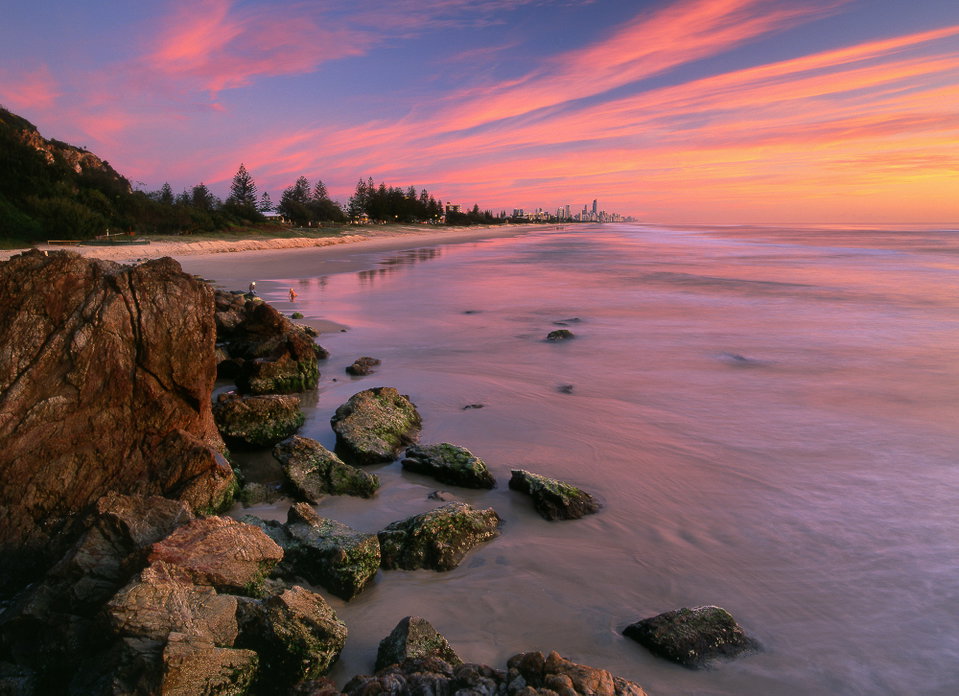
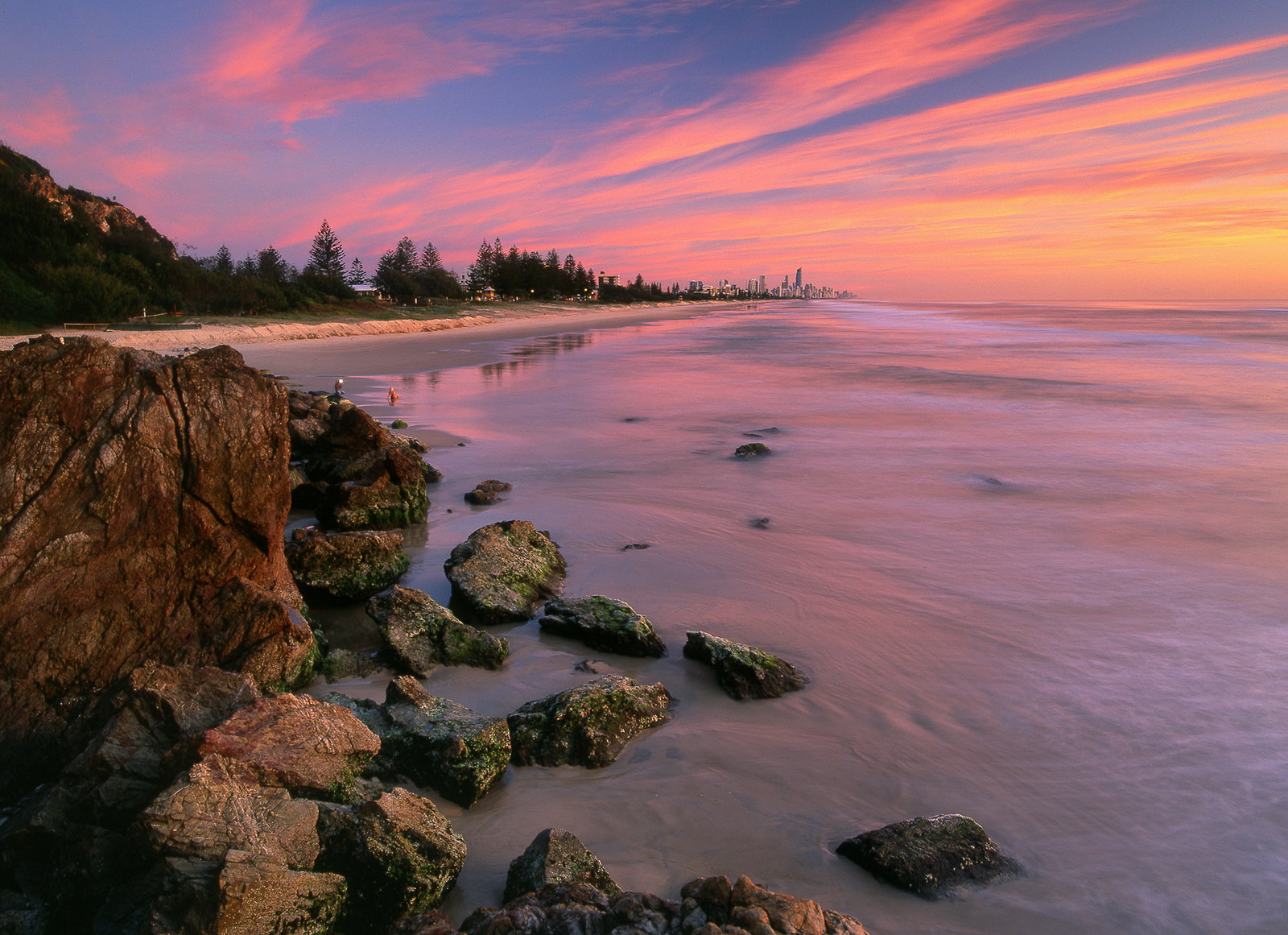
Surfers Paradise skyline rising behind golden beach and rolling surf, Gold Coast, Queensland

Destination guide

Gold Coast

Queensland, South East Australia · Australia

70 km of golden beaches, world-class surf, and a theme-park skyline that never sleeps

Best season

April to October (dry season, mild 20–25 °C days, low humidity)

From Nairobi

Approx. 16–20 hrs (no direct service; common connections via Dubai, Singapore, or Doha)

Why visit the Gold Coast?

Few destinations on earth pack this much variety into one compact coastal strip. The Gold Coast delivers world-famous surf beaches, four major theme parks, a growing fine-dining scene, lush subtropical hinterland, and some of Australia's best value resort hotels — all within easy reach of each other.

Surfers Paradise is the beating heart of it all: a 24-hour promenade of beach volleyball, markets, cocktail bars, and a beachfront that glows gold at sunrise. Head north to Broadbeach for upscale restaurants and the Pacific Fair shopping centre; south to Coolangatta for a laidback surf-town vibe and some of Queensland's most consistent point breaks. Inland, the Gondwana-listed rainforests of Lamington National Park and Springbrook offer an entirely different kind of wonder — ancient moss-draped trees, glowworm caves, and panoramic escarpment lookouts.

For families, the Gold Coast is hard to beat: Warner Bros. Movie World, Dreamworld, Sea World, and WhiteWater World sit within a short drive of each other on the northern edge of the city. And with warm, swimmable water for most of the year, golden sand in every direction, and an airport just 25 minutes from the centre, the logistics are effortless.

  • 70 km of patrolled beaches bookended by two distinct surf towns — Surfers Paradise and Coolangatta
  • Four major theme parks including Warner Bros. Movie World and Sea World within a 20-minute drive
  • UNESCO-listed Gondwana rainforests of Lamington and Springbrook just 45 minutes inland
  • Australia's most reliable surf, with breaks for beginners at Kurrawa and pros at Duranbah
  • A restaurant and rooftop bar scene that punches well above its beach-town weight
  • Whale watching (June–November) right offshore and dolphin feeding at Tangalooma on nearby Moreton Island

Best for

Families, surfers, beach lovers, theme-park fans, couples, nature and hinterland explorers

Trip style

Beach holiday, adventure, family trip, short break, food and wine

Known for

Surfers Paradise, world-class surf, theme parks, canal estates, subtropical rainforest hinterland

Quick facts

Best time to visit

April to October (dry season, mild 20–25 °C days, low humidity)

Currency

Australian Dollar (AUD)

Languages

English

Visa summary

Most visitors need an Electronic Travel Authority (ETA) or eVisitor visa, applied for online before travel. Citizens of 34 countries can apply for an ETA; UK and European passport holders typically use the eVisitor. US, Canadian, and other eligible nationals use the ETA. Check immi.homeaffairs.gov.au for your nationality.

Flight time from Nairobi

Approx. 16–20 hrs (no direct service; common connections via Dubai, Singapore, or Doha)

Airport / arrival

Gold Coast Airport (OOL) is in Coolangatta, 25 km south of Surfers Paradise. Tram (G:link light rail), coaches, taxis, and rideshare serve the city centre. Brisbane Airport (BNE, ~90 km north) offers more international services and connects by road or coach in about 1.5 hrs.

Safety note

Very safe for tourists. Standard urban precautions apply in Surfers Paradise at night; ocean swimming should always be between the red-and-yellow flags at patrolled beaches.

Visa and entry

Look up entry rules by passport for travel to Australia on the Tsavaro visa checker.

Check visa requirements for Australia

Things to do

Surf Surfers Paradise Beach

Half day to full day

The city's iconic beach offers patrolled swimming zones, beach volleyball, and a never-ending promenade. Sunrise here — with the skyscrapers turning pink behind you — is genuinely unmissable. Surf schools operate year-round for beginners.

Warner Bros. Movie World

Full day

Hollywood-themed rides, character parades, and stunt shows make this the Gold Coast's biggest theme-park draw. Highlights include the DC Rivals HyperCoaster (one of the Southern Hemisphere's longest) and the Justice League 4D ride. Book online for cheaper entry.

Explore Lamington National Park

Full day

An hour's drive inland, Lamington protects one of the world's largest remaining subtropical rainforests. Walk the treetop canopy walk at O'Reilly's Rainforest Retreat, spot Albert's lyrebirds, and cool off under multi-tiered waterfalls. A completely different world from the beach strip below.

Springbrook National Park & Natural Bridge

Half day to full day

Just 45 minutes from Surfers Paradise, Springbrook's escarpment lookouts deliver jaw-dropping views over the hinterland. The Natural Bridge cave is home to a glowworm colony — a night tour here is one of Queensland's most magical free experiences.

Sea World

Full day

Rides, roller coasters, and live animal presentations including sharks, polar bears, and dolphins. The new Leviathan roller coaster (opened 2024) is Australia's tallest and fastest. Great for families with mixed age groups.

Coolangatta Surf & Stroll

Half day

The southernmost suburb has a small-town soul that contrasts perfectly with the Surfers Paradise buzz. Walk the Tweed Heads headlands, watch locals surf Greenmount and Snapper Rocks point breaks, and eat fish and chips with a view. The Gold Coast's most relaxed beach precinct.

Gold Coast Broadwater & Marina Mirage

Half day

Take a jet-boat or kayak on the calm Broadwater, browse boutiques at Marina Mirage, or board a whale-watching cruise (June–November). The Southport Broadwater Parklands are ideal for picnics and paddleboarding with city views.

Eat and Drink in Broadbeach

Evening

The city's culinary heartbeat sits one suburb south of Surfers. Oracle precinct and The Star Gold Coast casino complex host everything from ramen to hatted restaurants. Kurrawa Surf Club does an honest sunset dinner with ocean views at very reasonable prices.

Best time to visit the Gold Coast

The best time to visit the Gold Coast is April to October, during Queensland's dry season, when temperatures sit comfortably between 20 °C and 25 °C, humidity is low, and rainfall is minimal. These months are ideal for beach days, hiking in the hinterland, and outdoor dining without the oppressive heat of summer.

April–May (Autumn): Warm ocean temperatures carry over from summer, crowds thin out after the Easter peak, and the hinterland is lush after the wet season. Excellent all-round conditions.

June–August (Winter): The Gold Coast's most popular tourist season with Sydneysiders and Melburnians fleeing the southern cold. Days are sunny, 19–23 °C, and almost rain-free. June–November is also prime whale-watching season as humpbacks migrate north. Book accommodation early.

September–October (Spring): Warm, dry, and uncrowded — arguably the sweet spot. Water temperatures start climbing back toward 22–24 °C. Wildflowers bloom in the hinterland. Surf schools are quieter and better value.

November–March (Summer): Hot and humid, 28–33 °C, with afternoon thunderstorms common. School holiday periods (December–January) bring the heaviest crowds and highest prices. Swimming is excellent but jellyfish (bluebottles) can appear during onshore winds. The wet season also brings more lush greenery to the hinterland. Budget travellers who book well ahead can find good deals outside of Christmas and New Year.
Is the Gold Coast safe to visit?

Yes — the Gold Coast is one of Australia's safest tourist destinations. It consistently ranks among the lowest-crime major cities in Queensland, and millions of international and domestic visitors travel here each year without incident.

Ocean safety is the most important practical concern: always swim between the red-and-yellow flags at patrolled beaches, as rips (fast-moving channels of water) can catch even confident swimmers off guard. Lifeguards are on duty at all major beaches year-round.

In Surfers Paradise, the entertainment strip can get noisy and occasionally rowdy on Friday and Saturday nights. Keep your valuables secured in your hotel safe, stay aware of your surroundings after midnight, and use licensed taxis or rideshare apps rather than accepting rides from strangers.

The hinterland national parks are safe to hike, but always carry water, tell someone your plans, and stick to marked trails — mobile coverage can be patchy above the escarpment.

Stinger (jellyfish) season peaks from October to May in the warmest water months; bluebottle stings are painful but rarely dangerous. The Gold Coast's beaches are south of the tropical stinger zone, so full stinger suits are not required. Sun protection (SPF 50+) is essential year-round given Queensland's UV intensity.

Suggested itinerary

5 Days on the Gold Coast

This itinerary is designed for a first-time visitor staying in Surfers Paradise or Broadbeach. It balances beach time, one big theme-park day, a hinterland escape, and enough eating and drinking to get a real sense of the city. Pace is relaxed; daily distances are short. Budget: mid-range (AUD 200–350/day for two, excluding accommodation).

Day 1

Arrive & Hit Surfers Paradise Beach

Check in and walk straight to the beach. Spend the afternoon swimming between the flags, strolling the Esplanade promenade, and watching the surf. As the sun drops, head to SkyPoint Observation Deck on Level 77 of Q1 Tower for 360-degree coastal views and a cocktail. Dinner on Orchid Avenue or at one of the lively restaurants along Cavill Avenue.

Gold Coast — Arrive & Hit Surfers Paradise Beach

Travel essentials

Getting around

The G:link light rail connects Gold Coast Airport (Coolangatta) to Helensvale station (connecting to Brisbane trains) with stops at all major beachside suburbs including Broadbeach, Surfers Paradise, and Southport. It runs from early morning until midnight and is the easiest way to travel the beach strip. Rideshare (Uber and Ola) is widely available and affordable. Car hire from the airport or Surfers Paradise is recommended for hinterland day trips — public transport does not serve Lamington or Springbrook.

Typical costs

Budget: AUD 90–130/day (hostel, self-catering, one attraction). Mid-range: AUD 200–350/day for two (hotel, restaurant dinners, theme parks). Upscale: AUD 500+/day for two (resort accommodation, hatted restaurants, private tours). Theme park single-day tickets run AUD 79–129; combo passes offer better value. Beach and hinterland activities are largely free.

Culture and etiquette

Australians are relaxed and informal — first names are used immediately, dress codes are casual except at upscale restaurants. Tipping is not customary but rounding up the bill is appreciated. Swimwear is acceptable on the beachfront promenade but not inside shops or restaurants. The Gold Coast has a large population of Japanese and Chinese visitors and businesses; menus often appear in multiple languages.

Safety and planning

Swim between the flags at all times. Apply SPF 50+ sunscreen every 2 hours — Queensland's UV index regularly hits extreme levels even on cloudy days. Carry sufficient water on hinterland walks. Travel insurance covering adventure activities and medical evacuation is strongly advised for all visitors to Australia.

Connectivity

4G/5G coverage from Telstra, Optus, and Vodafone is excellent across the beach strip and theme park precinct. Coverage is patchy in parts of the hinterland. Prepaid SIM cards from Telstra or Optus are available at the airport and at convenience stores; a 30-day plan with 30–50 GB data costs AUD 30–45. Free Wi-Fi is available at most hotels, cafes, and the G:link stations.

Payments

Australia is largely cashless — tap-and-pay (Visa, Mastercard, Amex) is accepted almost everywhere including market stalls and surf schools. ATMs are abundant in Surfers Paradise, Broadbeach, and Coolangatta. Forex and cash exchange is available at the airport and at money changers in Cavill Avenue Mall.

Gold Coast travel FAQs

More destinations to explore

Gold Coast, Australia